Build a world, tune your setup, and bring your friends into it. Explore the controls included with hosting and the resource upgrades you can choose as you grow.
Full server controlStart, stop, restart and drop into a live console. No support ticket for everyday jobs.
Human supportReal people handle billing, restores and anything destructive — AI only lines up logs and context.
Files & SFTPEdit configs in the browser or move whole worlds over SFTP. Your files, your access.
Mods & pluginsOne-click mods and plugins from your panel on eight games, plus tested Minecraft modpacks.
DDoS mitigationNetwork-level mitigation on every server, handled upstream. We do not open a location without it.
Scheduled tasksAutomate restarts, backups and commands on a schedule instead of babysitting the server.
SPLIT THE COST
One server. The whole crew chips in.
Create a Split the Cost link from any unpaid invoice and send it to your group. Friends pay any amount from $1 through PayPal, with no Runic account needed, and you keep full control of the server.
Links last up to 7 days and you can revoke them anytime
Payments credit the invoice automatically
Contributors never get access to your account, panel or files
Game support varies by title and server software. Backup and database allowances are shown with each selected plan before checkout.
PANEL TOUR
See the panel before you buy.
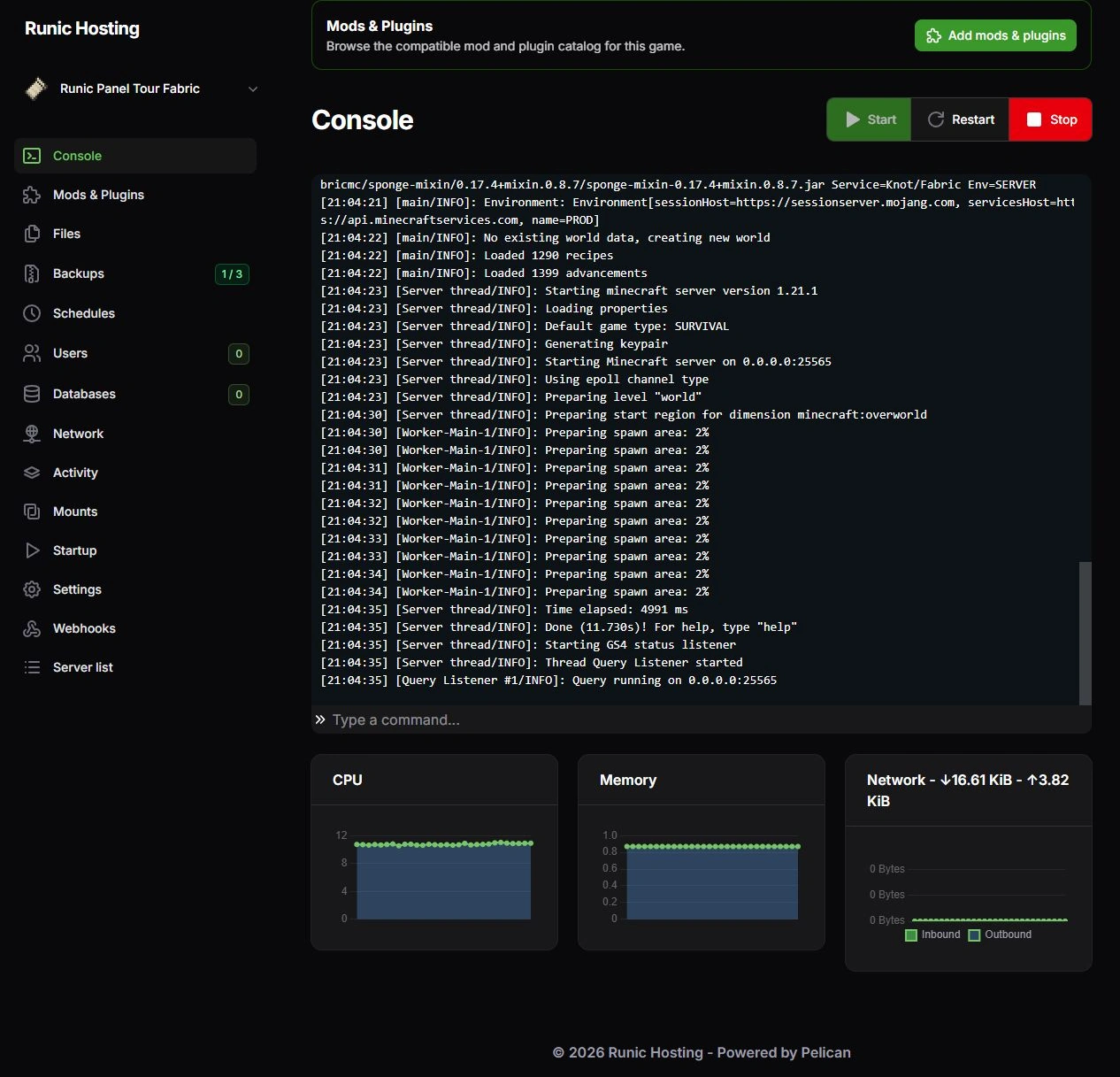
Real screenshots from a Runic server. This is exactly what you get after checkout.
Live console with start, restart and stop, plus CPU, memory and network graphs.
EVERY PLAN
Included with every server.
No matter which game or RAM size you pick. Upgrades only add to these.
NVMe storage
50 GB50 GB included on every game. +25 GB and +50 GB upgrades available.
CPU
Ryzen performance CPUsEvery server gets its own dedicated CPU allocation.
Backups
3 backup slotsAutomatic nightly backup around 3 AM Pacific, stored off the game node. Manual backups share the slots; the oldest unlocked backup rotates out. Add 5 slots for $1/month or 10 slots for $2/month (8 or 13 total).
Database
1 MariaDB databaseFor plugins that use MySQL, such as on Minecraft Java, Rust and Hytale. Reachable only from your server. Add 2 more with the database pack.
Transfer
UnmeteredNo bandwidth caps or overage fees.
Network
1 Gbps + DDoS mitigationNetwork-level DDoS mitigation on every server.
Extra ports
2 includedTwo extra ports in addition to required game ports, for compatible map plugins, voting plugins or voice-chat mods. Configure the plugin to use its assigned port.
File access
File manager + SFTPEdit files in the browser or connect with any SFTP client.
Console & startup
Full controlLive console, start/stop/restart and guided startup settings.
Scheduled tasks
No schedule capAutomate restarts, backups and commands, with up to 10 tasks in each schedule.
Subusers
No subuser capInvite friends with their own login and per-person permissions.
Support
24/7Tickets, email and Discord, any time.
Player slots
Set by the gamePlayer limits depend on the game and server configuration. See each game page.
MODS & PLUGINS
How mods install, game by game.
Everything one-click installs from Mods & Plugins in your panel, and file changes are rolled back if an install fails. Minecraft Java and Hytale can search the full library; for other games, every mod is installed and booted on a real server before we offer it. Guided installs use Files, SFTP or startup settings, with our game guide.
Full Modrinth and CurseForge library: Paper and Purpur plugins, plus Fabric, Forge, NeoForge and Quilt mods with dependencies resolved. Tested complete packs install in one action: Adrenaline and SkyBlock Plus on Fabric 1.21.1, and AsguhoServer on Fabric 1.21.4.
A growing selection of tested Thunderstore mods, with BepInEx and dependencies installed automatically. Some mods must also be installed on each player’s PC.
A growing selection of tested Steam Workshop mods, added for you. Other Workshop mods can be added by Workshop ID and Mod ID in the server configuration file.